III. Compound theory

Key focus of this chapter: naming chemical compounds

This chapter focuses on naming chemical compounds and gives concise summaries of the important things about covalent bond which contains electronegativity, polar and nonpolar bond, dipole moments of polar and nonpolar molecules, molecular forces, octet rule, VSEPR-Valence shell, formal charges, and hybridization in more detail.


 A. Naming compounds

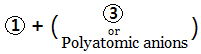
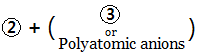
1. Naming oxoanions (atom + oxygen(s))


   2. Naming acids

     a. Oxoacids (hydrogen + oxoanion)


        ** H2SO3 : Sulfurous acid

           H2SO4 : Sulfuric acid

           H3PO4 : Phosphoric acid


      b. Hydrogen + anion


    3. Table of naming polyatomic anions and acids


       ** NH4+: Ammonium


    4. Naming compounds

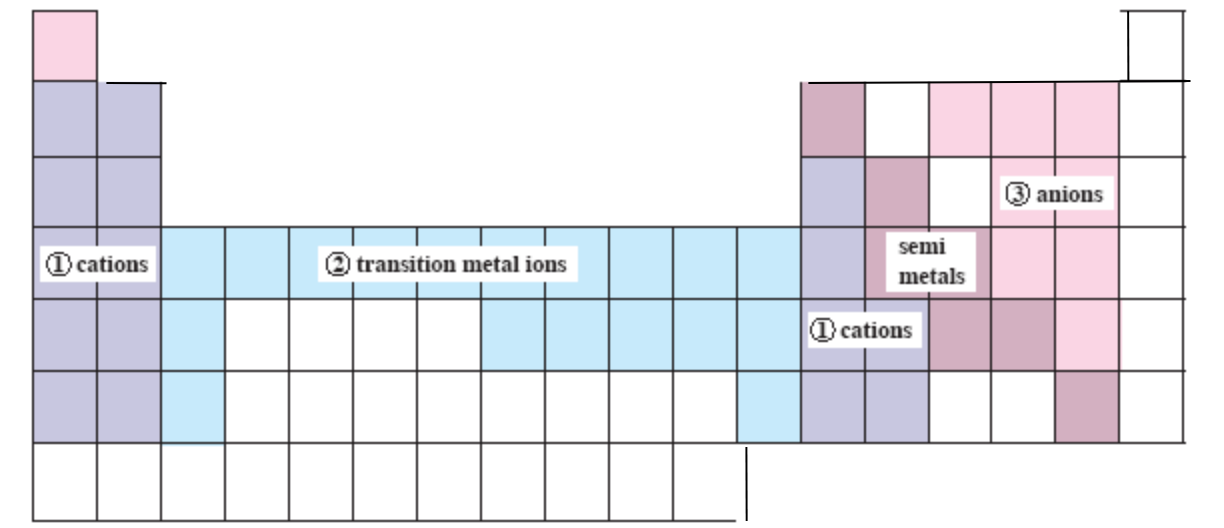
Fig. 1 Classification of groups
 Authenticated embedded content preview

B. Chemical Bonds


C. Covalent bond

   1. Electronegativity (EN)

     • Electronegativity is an atom’s ability to attract shared electrons toward itself in a covalent bond.

     • Higher electronegativity generally corresponds to stronger attraction for bonding electrons and greater nonmetallic character.


     • A larger electronegativity difference generally produces a more polar bond.

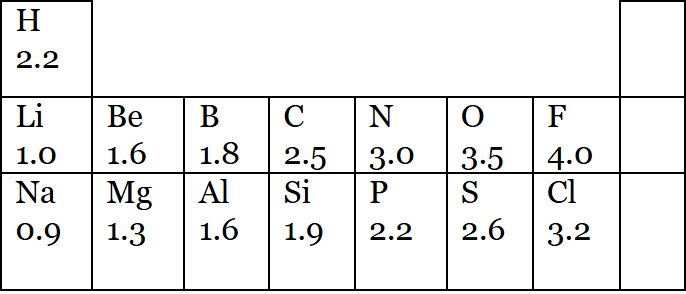
     In the same period, electronegativity increases as the atomic number increases.

     In the same group, electronegativity decreases as the atomic number increases.


         Fig. 2 Electronegativity in the periodic table
Authenticated source table 7


   2. Polar and nonpolar covalent bond


      Ex/ The order of polarity between two atoms:

NaF      >    LiF     >     HF     >     CH      >     F2

     (4.0-0.9=3.1)  (4.0-1.0=3.0)  (4.0-2.2=2.8)  (2.5-2.2=0.3)   (4.0-4.0=0.0)


          NaF and LiF are ionic compounds; HF has a strongly polar covalent bond, C–H is weakly polar, and F2 is nonpolar.


    3. Dipole moments of polar and nonpolar molecules


   4. Molecular forces (van der Waals force)

      : Attractive forces between molecules


** For molecules of comparable size, intermolecular-force strength often follows:

London dispersion < dipole–dipole < hydrogen bonding (when applicable)

            • Compare boiling points by considering all intermolecular forces plus molecular size/polarizability; do not use one universal ranking across unrelated series.


       ** London dispersion becomes increasingly important as electron count and polarizability increase.


           - the strength order of dipole-dipole force : HI < HBr < HCl

           - the strength order of London dispersion force: HCl < HBr < HI

           - the strength order of the boiling and melting point: HCl < HBr < HI


       ** Other covalent bonds


    5. Octet rule

      : Many main-group atoms tend toward eight valence electrons (a noble-gas-like configuration), but important exceptions exist.


       a. Valence electron:

         Electrons of atoms in the outermost shell

         Forming covalent bonds

         Main factor to distinguish the chemical properties of atoms

         Ex/


        b. Lewis structure

          Repulsive and attractive forces make optimum distance between two atoms

            - repulsive forces between two different atom’s electrons

            - attractive forces between one atom’s electrons and another atom’s nucleus

          Indicating covalent bonds

            - double bonds by sharing 4 electrons (2 pairs): CO2, O2

            - triple bonds by sharing 6 electrons (3 pairs): HCN, N2


        c. Exception to octet rule

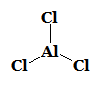
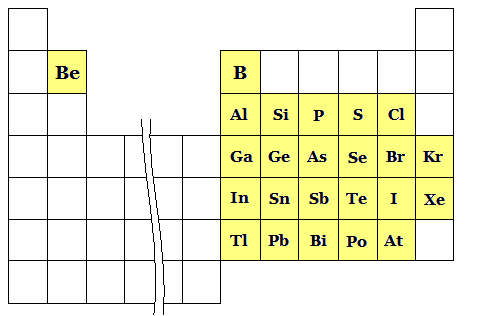
Some atoms (Be, B, Al) have less than 8 electrons in their outermost shell.

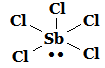
• Period 3 and heavier central atoms can form hypervalent species with more than eight electrons assigned around the central atom.


  Fig. 3 atoms that are exceptions to the octet rule
       Authenticated embedded content preview

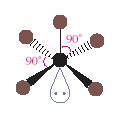
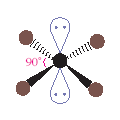
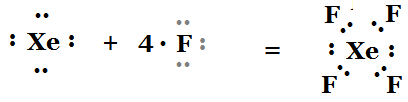
            • For DAT purposes, recognize common hypervalent examples such as PCl5, SF6, and XeF4; simple d-orbital promotion is not required as an explanation.


     Ex/ PCl5, SF6, XeF4
        Authenticated embedded content preview


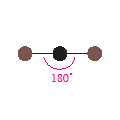
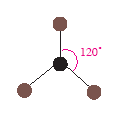
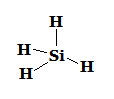
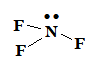
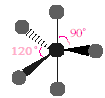
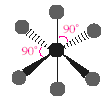
     6. VSEPR (valence-shell electron-pair repulsion) model

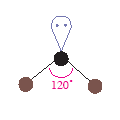
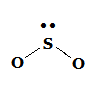
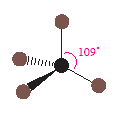
: Electron domains around a central atom arrange to minimize repulsions; lone pairs generally repel more strongly than bonding pairs.


     7. Formal charges

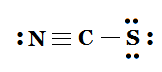
       : Formal charge is a bookkeeping charge assigned to an atom in a Lewis structure.


              Ex/ 

             Authenticated embedded content preview


Formal charge of N: 5 – 3 – 2 = 0

Formal charge of C: 4 – 4 – 0 = 0

Formal charge of S: 6 – 1 – 6 = -1

     8. Hybridization

       : Hybridization describes mixing of atomic orbitals on an atom to form hybrid orbitals used in bonding.


         a. Sigma (σ) bond

           • A σ bond forms by head-on overlap along the internuclear axis.

           • Electron density is concentrated along the internuclear axis.

           • A σ bond has cylindrical symmetry about the bond axis.

           • Each bonding molecular orbital can hold a maximum of 2 electrons.


         b. Pi (π) bond

           • A π bond forms by side-by-side overlap of parallel p orbitals.

           • π electron density lies above and below the internuclear axis.

           • A π bond is generally weaker than a comparable σ bond.


         c. Application

           Single bond: 1 sigma bond and 0 pi bond

           Double bond: 1 sigma bond and 1 pi bond

           Triple bond: 1 sigma bond and 2 pi bonds


         d. Hybrid orbitals


             Ex/ BF3 : 3 bonds and 0 lone pair  Source symbol Wingdings F0E0  3+0=3  Source symbol Wingdings F0E0  sp2 types of orbital

                  NH3: 3 bonds and 1 lone pair  Source symbol Wingdings F0E0  3+1=4  Source symbol Wingdings F0E0  sp3 types of orbital


       9. Resonance

         : Resonance is used when one Lewis structure cannot adequately represent electron distribution; the real structure is a resonance hybrid.


• Important resonance contributors delocalize electron density and can stabilize a species.

• Resonance contributors keep the same atom connectivity and total number of electrons; only electron placement changes.

Ex/ O3, OCN-, NO3-


D. Magnetism


E. Unit cells

: A unit cell is the smallest repeating 3-D portion of a crystal lattice that reproduces the crystal by translation.