II. Orbital and Periodicity
Key focus of this chapter: periodic table with groups
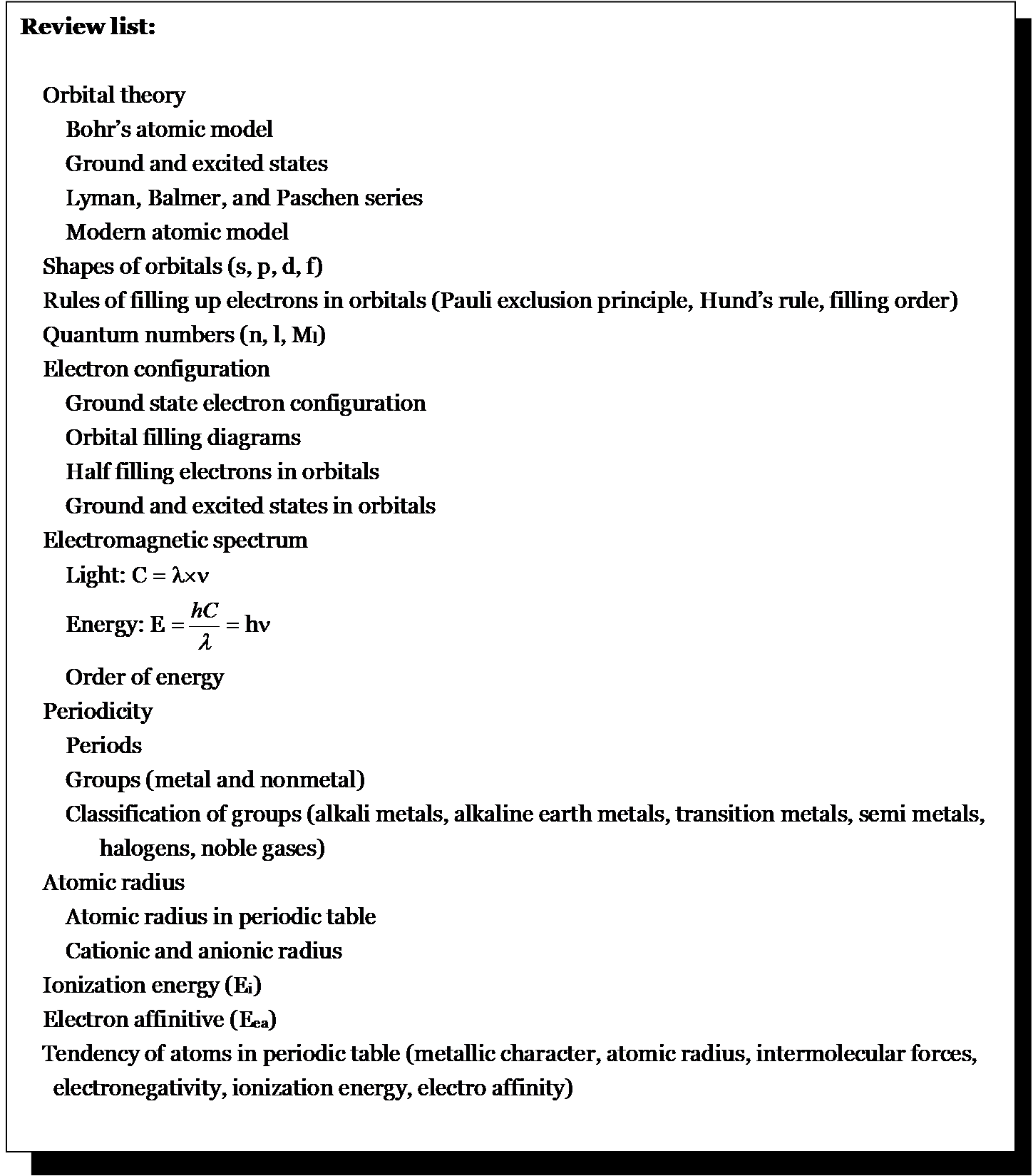
This chapter focuses on periodic table with groups and gives concise summaries of the important things about orbital theory, shapes of orbitals, rules of filling up electrons in orbitals, quantum numbers, electron configuration, atomic radius, ionization, and electron affinitive in more detail.
A. Orbital theory
1. Bohr’s atomic model
• Bohr’s model accurately describes the hydrogen atom and other one-electron species.
• In Bohr’s model, electrons occupy quantized energy levels (shells) around the nucleus; they are not treated as classical particles moving in fixed circular paths in the modern model.
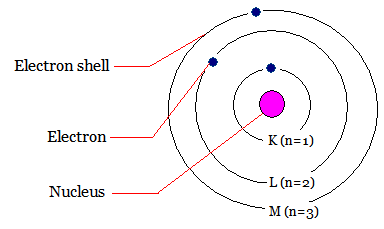
• Each electron shell is identified by the principal quantum number (n). For hydrogen, energy increases as n increases: K (n=1) < L (n=2) < M (n=3) < N (n=4).
Fig. 1 Bohr’s atomic model
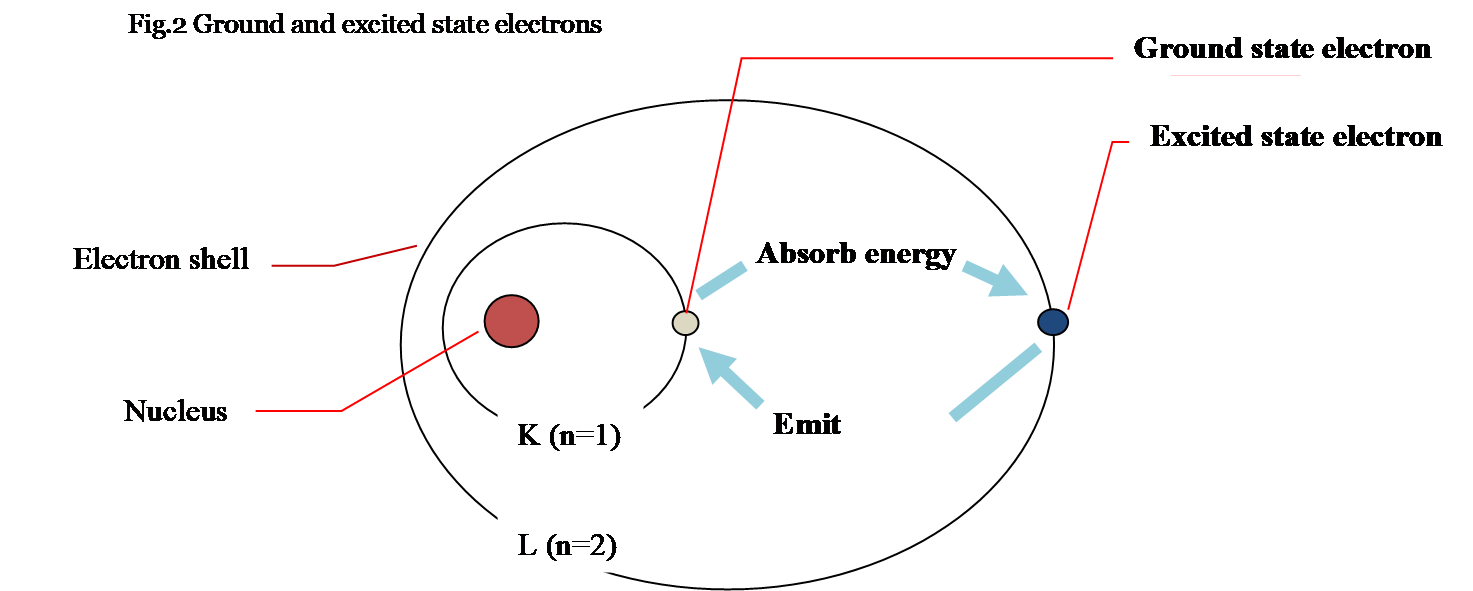
• Energy change when electrons move to other electron shells
|

2. Lyman, Balmer, and Paschen series
|
3. Modern atomic model
: Limitations of Bohr’s model led to the modern quantum-mechanical model (orbital theory).
a. Orbital theory
• Electrons do not move in fixed paths. An orbital describes a region of high probability for finding an electron.
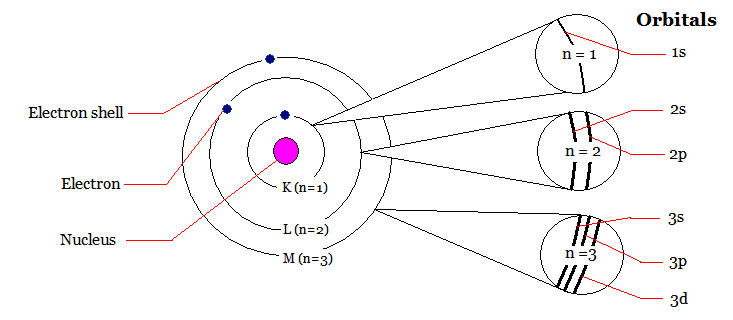
• Each principal shell contains one or more subshells (s, p, d, f as allowed by n).
b. Electron shells and orbitals
• As n increases, more subshell types become available: n = 1 has s; n = 2 has s and p; n = 3 has s, p, and d; n = 4 has s, p, d, and f.
|
Fig. 3 Modern atomic model 
B. Shapes of orbitals
|
C. Rules of filling up electrons in orbitals
: Electrons
are expressed by arrow (
,
)
in the orbital filling diagram
|
D. Quantum numbers
: Quantum numbers describe an electron’s shell, subshell, orbital orientation, and spin.
|
• Combined quantum numbers (n, l, ml)
|
E. Electron configuration
1. Filling order of electrons in orbitals (from low to high energy)
1s
2s
2p
3s
3p
4s
3d
4p
5s
4d
5p
….
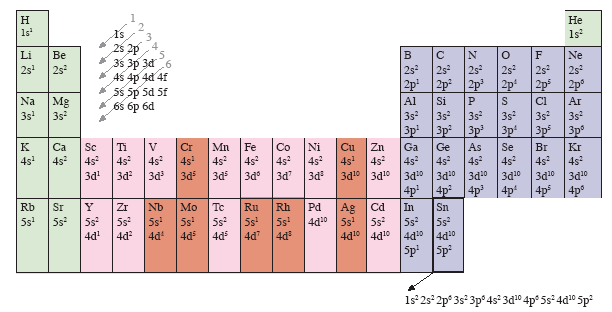
Fig. 4 Position of orbitals in the periodic table
| ||||||||||||||||||||||||||||||||||
2. Electron configuration
: Electron configuration describes how electrons occupy atomic orbitals.
• Ex/
|
Fig. 5 Ground state electron configuration in the periodic table

** Exceptional atoms of electron configuration
Cr, Cu, Nb, Mo, Ru, Rh, Ag (Dark red color above)
Ex/ Cr: 1s22s22p63s23p64s23d4
(X)
1s22s22p63s23p64s13d5
(O)
Cu: 1s22s22p63s23p64s23d9
(X)
1s22s22p63s23p64s13d10
(O)
F. Application of electron configuration
1. Counting of unpaired electrons: half filling electrons in orbital
Si: 1s22s22p63s23p2


1s 2s 2p 3s 3p (2 unpaired
electrons in 3p orbital)
P: 1s22s22p63s23p3


1s 2s 2p 3s 3p (3 unpaired electrons in 3p orbital)
S: 1s22s22p63s23p4



1s 2s 2p 3s 3p (2 unpaired electrons in 3p orbital)
Cl: 1s22s22p63s23p5


1s 2s 2p 3s 3p (1 unpaired electron in 3p orbital)
2. Ground state and excited state
• Ground state: the lowest-energy electron configuration.
Si: 1s22s22p63s23p2


1s 2s 2p 3s 3p (low
energy state electron in 3s orbital)
• Excited state: one or more electrons are promoted to higher-energy orbitals.
Si:
1s22s22p63s13p3


1s 2s 2p 3s 3p (high
energy state electron in 3p orbital)
G. Electromagnetic spectrum
1. Light
• Classified by wavelength (
)
• Speed of light: c = 3.00 × 10⁸ m/s in vacuum.
• Frequency (ν): number of wave cycles per second (Hz = s⁻¹).
|
** Photoelectric effect: electrons are ejected from a metal only when incident light has a frequency above the threshold frequency; photon energy is E = hν.
2. Energy (E)
|
• Long wavelength
low frequency
low energy
• Short wavelength
high frequency
high energy
• Ex/ Gamma rays
short wavelength
high energy
3. Order of energy
|
H. Periodicity
1. Periods
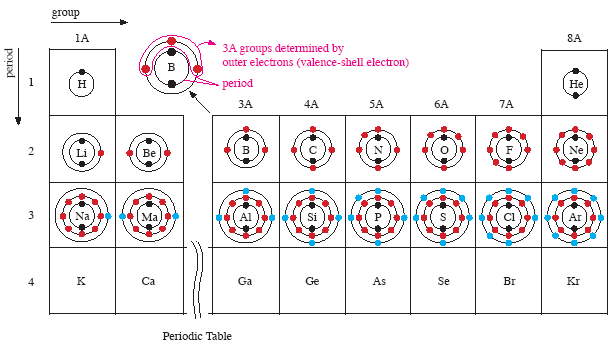
• Seven rows (n = 1, 2, 3, 4, 5, 6, 7)
• The period number corresponds to the highest occupied principal energy level for main-group elements.
2. Groups
• 18 groups (columns). Modern numbering is Groups 1–18; older A/B notation may also appear in study materials.
• Elements in the same group often have similar chemical properties because they have similar valence-electron configurations.
have the same outermost electrons)
Ex/ Be, Mg, and Ca are Group 2 elements and have two valence electrons.
electrons)
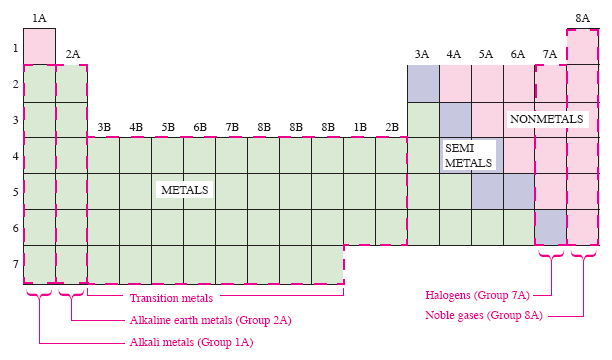
Fig. 6 Periods and groups

a. Metal and nonmetal
|
b. Classification of groups
Fig. 7 Classification of groups in periodic table

| ||||||||||||||||||
I. Atomic radius
: Atomic radius is a measure of atomic size; it generally decreases across a period and increases down a group.
1. Atomic radius in periodic table
• In the same period, when the atomic number is increased, the atomic radius is decreased
because the attraction force between the protons (+) and outer electrons (-) is increased.
Li > Be > B > C > N > O > F
• In the same group, when the atomic number is increased, the atomic radius is increased
because the electron shells are increased.
Li < Na < K < Rb < Cs < Fr
• In an isoelectronic series, radius decreases as nuclear charge (Z) increases.
metallic) radius is greater than its neutral atom.
Ca2+ < K+ < Ar < Cl- < S2-
2. Cationic (metallic) and anionic (nonmetallic) radius
|
J. Ionization energy (Ei)
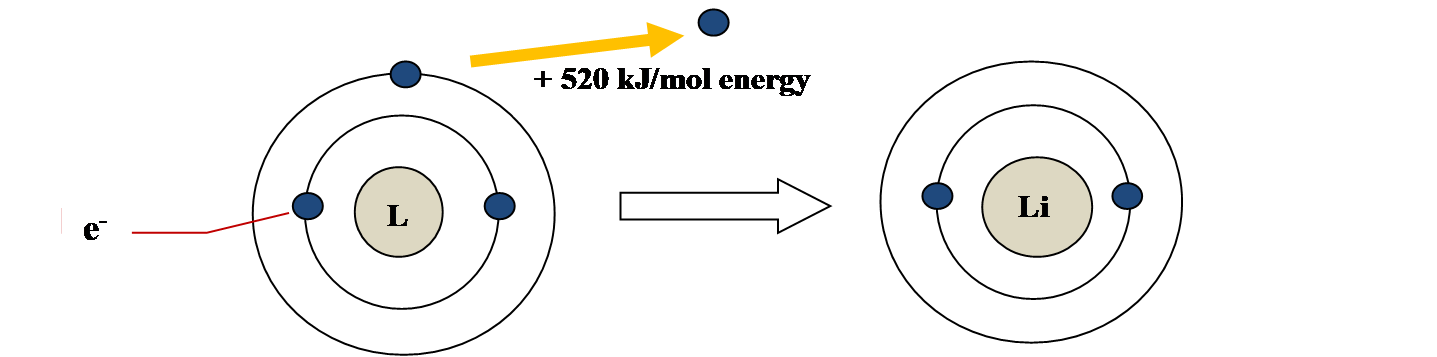
: Ionization energy is the energy required to remove an electron from a gaseous atom or ion.
Atom + energy
Cationic atom + e-
Fig. 8 Ionization energy of Li

Li + energy of (+520 kJ/mol)
Li+ + e-

• First ionization energy (IE₁): energy required to remove the first electron from a gaseous atom.
octet rule)
Ar > Be > Li
• Second ionization energy (IE₂): energy required to remove a second electron from the gaseous +1 ion.
Li > Ar > Be
|
a. General trend
• In the same period, with the increasing atomic number, the Ei is increased.
O < F < Ne
• In the same group, with the increasing atomic number, the Ei is decreased.
He > Ne > Ar
• The half-filled or fully-filled electrons in each orbital have a strong Ei to remove an
outermost electron.
Ex/ Be: 


1s 2s (1/1 fully-filled in
2s orbital)
B: 


1s 2s 2p (1/3 half-filled in
2p orbital)
Therefore, ionization energy: Be > B
Ex/ C: 


1s 2s 2p (2/3 half-filled in 2p orbitals)
N: 


1s 2s 2p (3/3 half-filled in 2p orbitals)
O: 


1s 2s 2p (1/3 fully-filled in 2p orbitals)
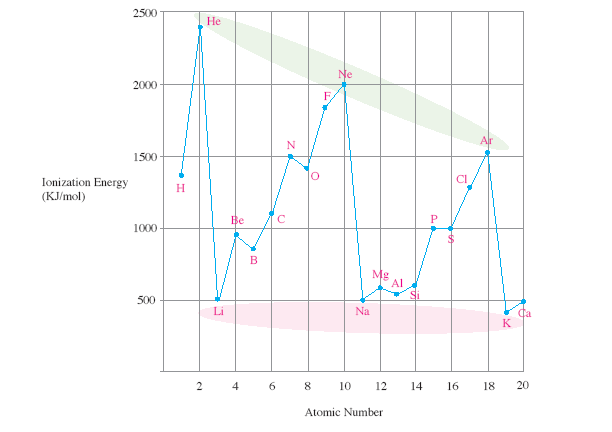
Therefore, ionization energy: N > O > C
Fig. 9 Ionization energy of the atoms

K. Electron affinity (EA)
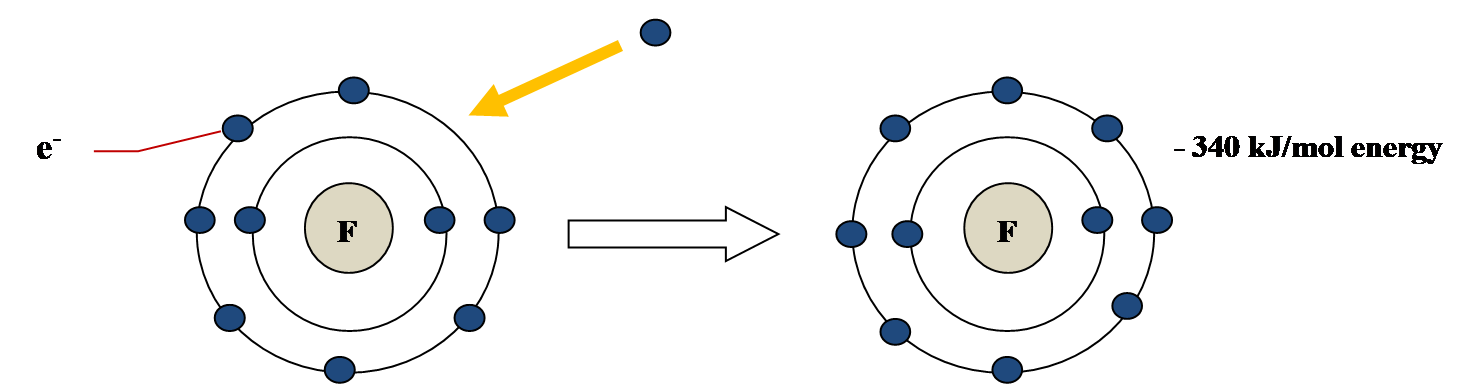
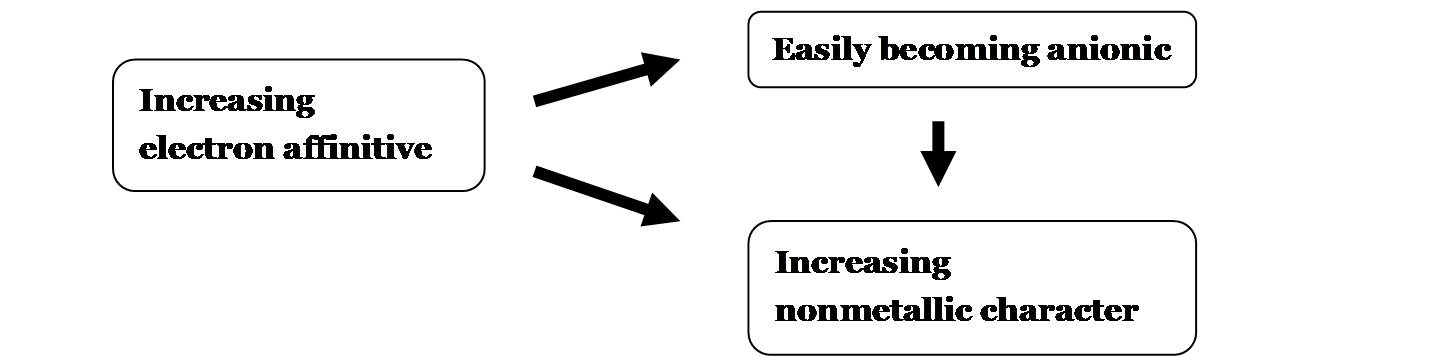
: Electron affinity describes the energy change when a gaseous atom gains an electron. For many nonmetals the process is exothermic; sign conventions vary by textbook, so focus on relative favorability/trends for DAT questions.
Atom + e-
anionic atom + energy
Fig. 10 Electron affinity of F

F + e-
F- +
energy of (-340 kJ/mol)

a. General trends
• Noble gases have very unfavorable electron affinities because an added electron must enter a higher-energy shell/subshell.
• Across a period, electron affinity generally becomes more favorable (more energy released), but the trend is irregular.
N < O < F
• Down a group, electron affinity generally becomes less favorable, with important exceptions (for example, Cl is more favorable than F).
Cl > Br > I ** exception (F < Cl)
• An atom that is 2/3 half-filled in orbitals has the stronger Eea than 3/3 half-filled in orbitals.
Ex/ C: 


1s 2s 2p (2/3 half-filled in
2p orbitals)
N: 


1s 2s 2p (3/3 half-filled
in 2p orbitals)
Therefore, electron affinity is more favorable for C than for N (N is relatively unfavorable because of its half-filled 2p subshell).
• An atom that is 2/3 fully-filled in orbitals, has the stronger Eea than 3/3 fully-filled in
orbitals.
Ex/ F: 


1s 2s 2p (2/3 fully-filled
in 2p orbitals)
Ne: 


1s 2s 2p (3/3 fully-filled
in 2p orbitals)
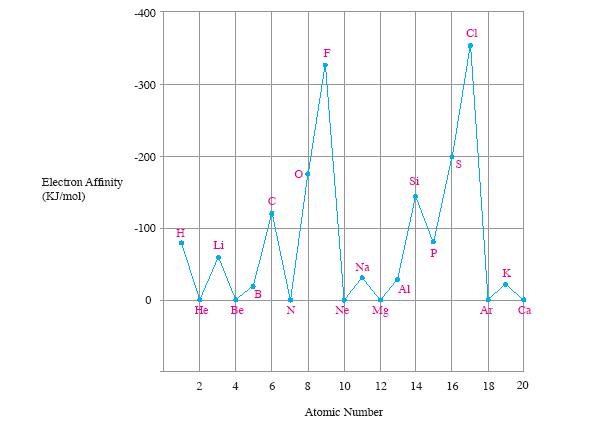
Therefore, F has a much more favorable electron affinity than Ne; noble gases have very unfavorable electron addition.
Fig. 11 Electron affinity of the atoms

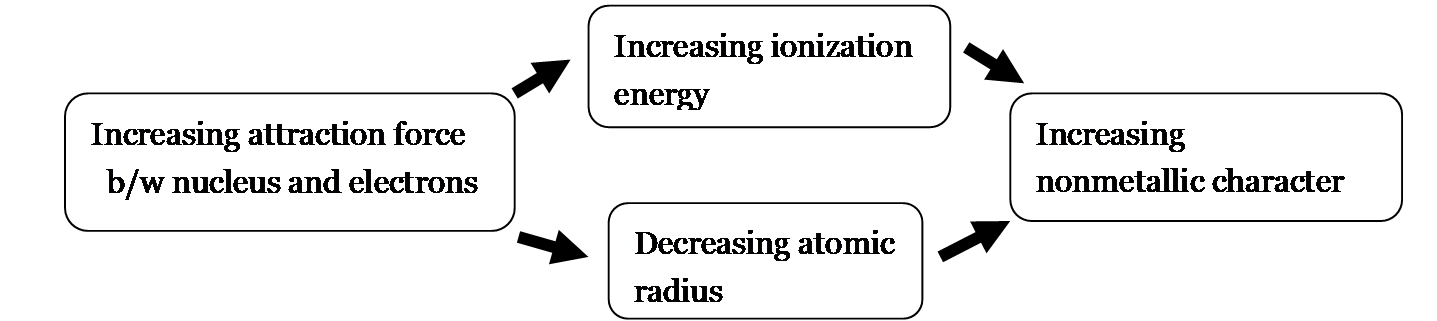
L. Tendency of atoms in periodic table
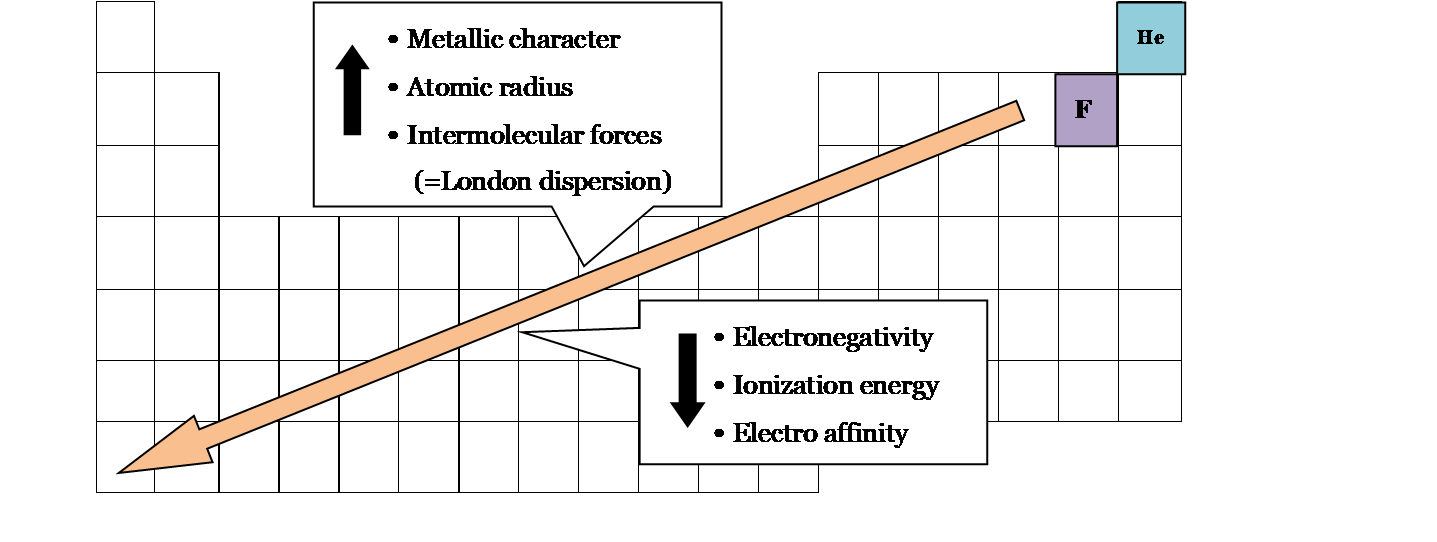
• Moving left and down the periodic table, metallic character and atomic radius generally increase. London dispersion forces generally increase with electron count/polarizability, but are not a simple universal periodic trend.
• Moving right and up, electronegativity and first ionization energy generally increase. Electron affinity is less regular and has important exceptions.
|
Fig 12. Tendency of atoms in periodic table

** He: Strongest ionization energy
F: Strongest electronegativity