
II. Taxonomy
Key focus of this chapter: domains and kingdoms
This chapter focuses on domain and kingdom and gives concise summaries of the important things about 3 domains 5 kingdoms in more detail.
Source title artwork
A. Chronological order of pre-biotic chemicals

* Early earth consisted of reducing atmosphere of CH4, NH3, H2, H2O, and H2S
B. Hierarchy
Domain - Eukarya, Bacteria, Archea
Kingdom - Monera, Protista, Fungi, Plantae, Animalia
Phylum - Chordata
Class - Mammalia
Order – Carnivora, Primates
Family - Hominidae
Genus - Homo
Species - Homo Sapiens
** Classification of human indicated in bold
C. Three domains and five kingdoms
| |||||||||||||||||||||||||||||
1. Domain Bacteria
• Most diverse and widespread microorganism
• Shapes with spiral, rod-shaped, and spherical
• Getting energy from glycolysis and electron transport chain
• Eg/ Proteobacteria, Gram-positive and gram-negative bacteria, Blue-green algae (cyanobacteria), Spirochete, Chlamydias
2. Domain Archaea
• Living in extreme environments
• Eg/ Crenarchaeotes, euryarchaeotes, korarchaeotes, nanoarchaeotes, sulfolobus
D. Diversity of metabolic adaptations
|
E. Kingdom Protista
|
F. Kingdom Fungi
Heterotroph organisms that break down molecules and absorb nutrients
• Important roles on ecosystems and human welfare
- Decomposer to recycle chemical elements
- Symbionts (mycorrhizae, lichens)
- Yeast, food source, antibiotic producer
• Cell walls with chitin
• Absent chloroplasts
• Both asexual and sexual reproduction
• Pathogens to human
1. Structure
• Cell wall made of chitin
• Mycelium: Interwoven mass of hyphae
• Hyphae: Network of filaments composed of tubular cells
- Septate hypha: Dividing cells by crossing walls in hyphae
- Conecytic hypha: a continuous cytoplasmic cell of hyphae
• Mycorrhizae: Symbiotic mutual relationship with plants
- Plants supply to fungi organic nutrients
- Fungi supply to plants minerals that plants cannot acquire
2. Classification
|
** Lichens (pioneer and symbiosis organism between algae and fungi)
G. Kingdom Plantae
1. Classification of plantae
| |||||||||||||||||||||||||
2. Plant of Angiosperms
a. Monocot and dicot
|
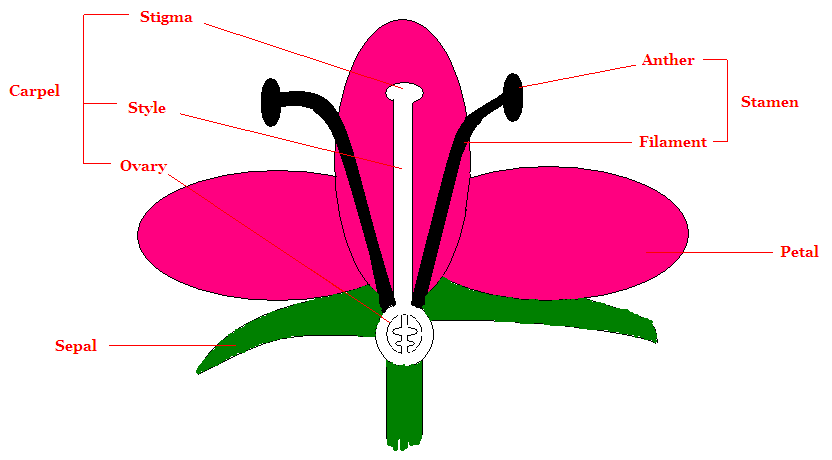
b. Structures and functions of flower
Fig. 1
|
c. Plant tissues
|
** Casparian strip: a waxy boundary not to permeate water
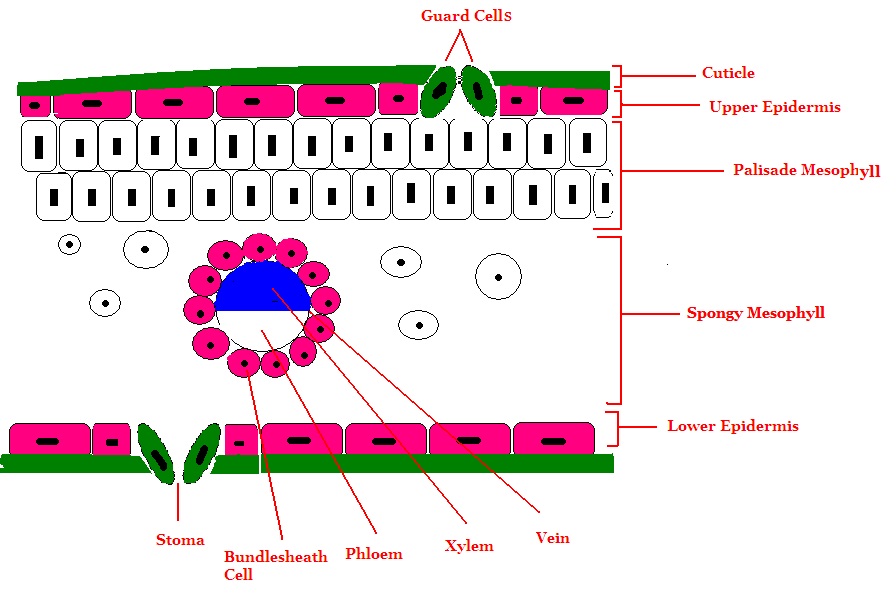
d. Anatomy of leaf
Fig. 2
|
** Transpiration
- Evaporation of water by temperature, wind, and light at the surface of leaves
- This creates water tension and moves water upward in xylem.
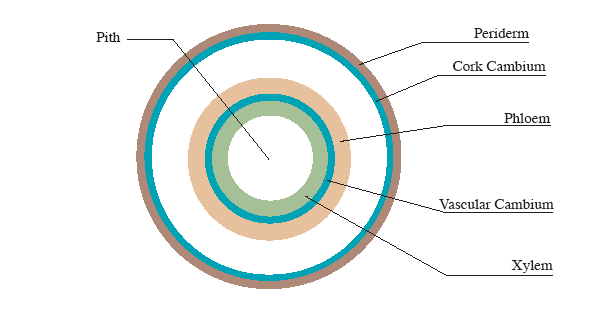
e. Anatomy of stem
Fig 3
|
f. Modified stems
|
g. Plant hormones
|
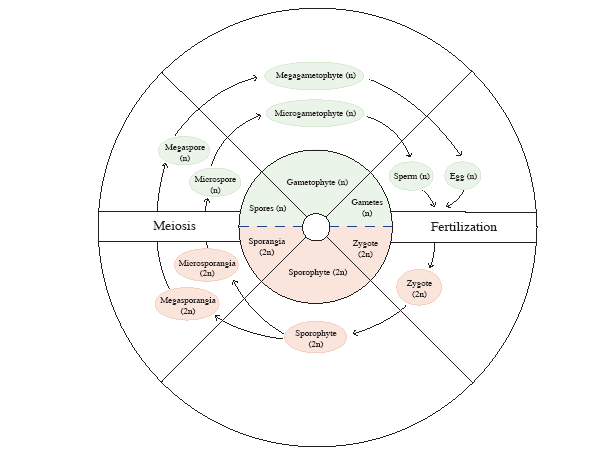
h. Life cycle of angiosperm
Fig. 4
H. Kingdom Animalia
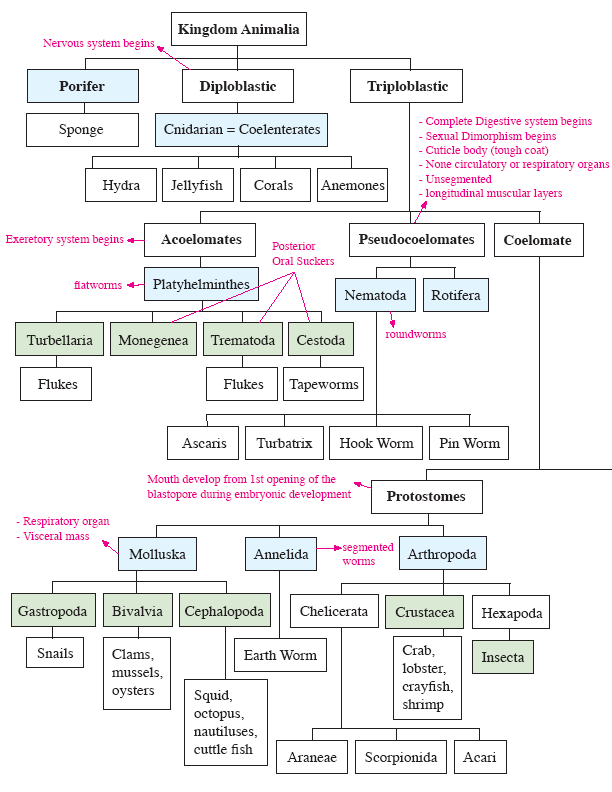
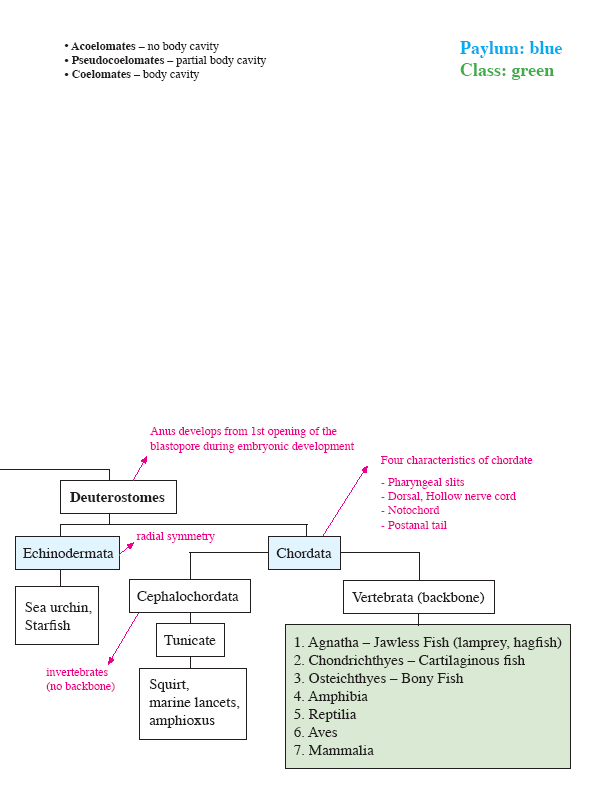
1. Pedigree and summary
|
2. Diagram of pedigree
I. Animal Reproduction
1. Asexual reproduction
• Budding: new individual arises from parent body
• Fission: the separation of a parent body into two parts
• Fragmentation: the breaking of the parent body into several pieces and growing into complete adults.
• Regeneration: Growing of lost body part
• Parthenogenesis: Developing an egg without fertilization
2. Sexual reproduction
|
** Duck-billed platypus: a mammal but ovoviviparity
3. Sexual and asexual reproduction
• Hermaphroditism: Each individual organism has both male and female reproductive systems
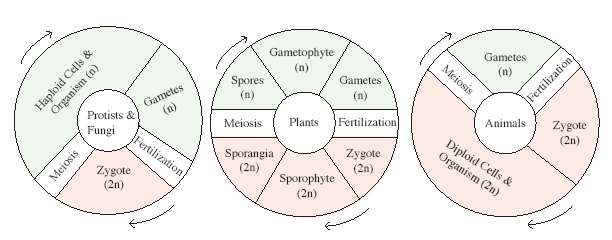
J. Life cycle of animals, plants, and fungi
• Protists and fungi: Haploid life cycle dominates
• Plant: Alternation of generation
• Animal: Diploid life cycle dominates
Fig. 5
1. The alternation of generation that is half diploid and half haploid applies to which kingdom?
A. Animals
B. Fungi
C. Plants
D. Monera
E. Protists