This chapter focuses immunity system and gives concise summaries of the important things about lymphatic system, defense systme, nonspecific immunity, specific immunity, and immune responses.
A.Lymphatic system
• Interstitial fluid enters lymphatic
capillaries and becomes lymph.
• Lymph nodes filter lymph and contain
macrophages and lymphocytes that help remove pathogens and foreign material.
• Filtered lymph returns to the
bloodstream through lymphatic vessels.
Lymphoid
tissues
Functions
Central
lymphoid tissues
Thymus
• Site of T-cell
maturation and selection
• Produces thymic
hormones that support T-cell development
Bone
marrow
• Produces blood cells; site of B-cell maturation
Peripheral
lymphoid tissues
Adenoids
• Help trap
inhaled pathogens and participate in immune responsesantibodies
Tonsils
• Help protect against pathogens entering through the mouth and
nose
Lymph
nodes
• Filter lymph and provide sites for lymphocyte activation
Spleen
• Filters blood, removes old red blood cells, and supports
immune responses
Peyer’s
patches
• Lymphoid tissue in the small intestine that monitors
intestinal antigens
Lymphatic
vessels
• Transport lymph and return it to the bloodstream
B.Defense system
Immunity
Responses to invading pathogens
Nonspecific
Immunity
(Innate
Immunity)
External
Defenses
•
Skin
•
Secretions
•
Mucous membranes
Internal Defenses
• Antimicrobial proteins
• Inflammatory
response
• Phagocytic
white blood cells
• Natural killer (NK) cells
Specific Immunity
(Adaptive
Immunity)
• Humoral immunity (B cells and antibodies)
• Cell-mediated immunity (T cells)
C.Nonspecific Immunity
Rapid, nonspecific
responses to infectious agents.
1.External defenses
a.Skin – Forms a
physical barrier against invading pathogens.
b.Secretions –
Lysozyme in tears and saliva helps destroy bacterial cell walls; other
secretions also inhibit microbial growth.
c.Mucous membranes –
Mucus traps microbes in the respiratory and digestive tracts.
2.Internal
Defenses
a.Antimicrobial
proteins
• Complement system
-Composed of
a group of plasma proteins.
-Promotes
inflammation, opsonization, and lysis of invading cells.
• Interferon
-Antiviral
signaling proteins released by infected cells that help neighboring cells
resist viral infection.
b.Inflammatory Response
• Histamine – Released mainly by mast
cells; causes vasodilation and increased capillary permeability during
inflammation.
•
Chemokines – Attract immune cells, including phagocytes, to sites of infection
or injury.
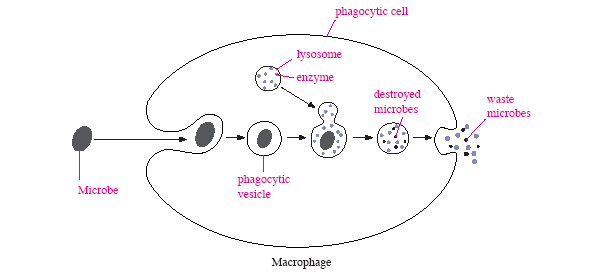
c.Phagocytic
cells (macrophages)
Fig. 1
Phagocytic
white blood cells
Functions and features
Neutrophils
• Engulf microorganisms and foreign particles
Monocytes
• Differentiate
into macrophages and dendritic cells in tissues
Eosinophils
• Limited phagocytic activity
• Release toxic
granule proteins that help kill parasites
• Contribute to
allergic and inflammatory responses
d.Natural
killer cells
• Kill
virus-infected and tumor cells by releasing perforin and other cytotoxic
molecules.
• Can trigger
apoptosis (programmed cell death) in target cells.
D.Specific Immunity
Slower,
antigen-specific responses that generate immunological memory.
1.Basic
theory
a.Terminology
• Antibiotic
-Antimicrobial
drug that kills microorganisms or inhibits their growth; antibiotics primarily
target bacteria.
-Many
antibiotics inhibit bacterial processes such as cell-wall synthesis or protein
synthesis.
-Antibiotics
do not treat viral infections.
• Cytokines
-Signaling
proteins secreted by immune and other cells.
-Help
activate and regulate immune cells and coordinate immune responses.
b.Structures
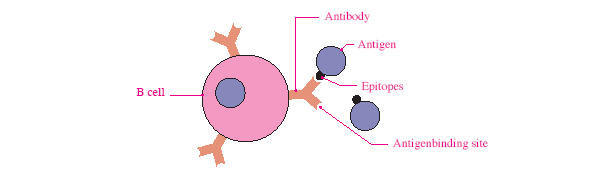
of B cells and antigens
Fig. 2
• Antibodies
-Immunoglobulins
produced by plasma cells; they circulate in blood and other body fluids.
-Bind
specific antigens and help neutralize or mark them for destruction.
• Antigen
- A molecule or molecular structure
specifically recognized by antibodies or lymphocyte receptors.
• Epitope
-A specific region of an antigen
recognized by an antibody or lymphocyte receptor.
-Also called an antigenic
determinant.
c.Lymphocytes
• Major lymphocyte
types include B cells, T cells, and natural killer (NK) cells.
• Lymphocytes are central to
adaptive immunity; NK cells are lymphocytes that function in innate immunity.
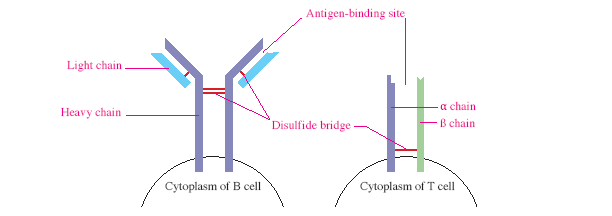
d.Structure of B-cell
and T-cell receptors
Fig. 3
Receptors
Features
B
cell receptor
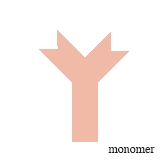
• Y-shaped
membrane immunoglobulin composed of two heavy chains and two light chains
• Disulfide bonds stabilize the heavy and light chains
T
cell receptor
• Heterodimer
composed of two different polypeptide chains, usually α and β
• A disulfide bond links the α and β chains
e.Lymphocyte
Development
Lymphocytes arise from hematopoietic stem
cells in bone marrow. B cells mature in bone marrow, whereas T cells mature in
the thymus.
Fig. 4
f.Clonal
selection of lymphocytes
• Clonal selection –
Antigen-driven activation and proliferation of lymphocytes with receptors
specific to that antigen.
• Effector cells (e.g., plasma
cells)
-Short-lived
cells that carry out the immediate immune response.
-Plasma
cells secrete antibodies specific to the activating antigen.
• Memory cells
-Long-lived
cells.
-Carry
receptors specific to the antigen and respond rapidly upon re-exposure.
• Primary immune response
-Antigen-specific
B and T cells undergo clonal expansion and differentiate into effector and
memory cells.
-The
response develops relatively slowly during the first exposure.
• Secondary immune response
- Faster, stronger,
and often longer-lasting response to the same antigen than the primary
response.
2.Humoral
and cell-mediated immunities
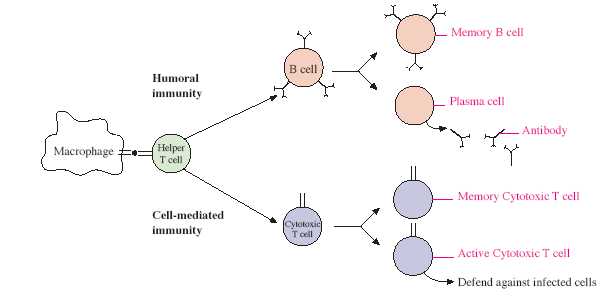
• Macrophage
-Engulfs
pathogens and presents antigen fragments to helper T cells.
• Helper T cell
-Recognizes
antigen presented by antigen-presenting cells on MHC class II molecules.
-Activates B
cells, cytotoxic T cells, and other immune cells through cytokines and
cell-to-cell signaling.
Fig. 5
a.Humoral Immunity
Humoral immunity is mediated by B cells and
antibodies and is especially effective against extracellular pathogens and
toxins.
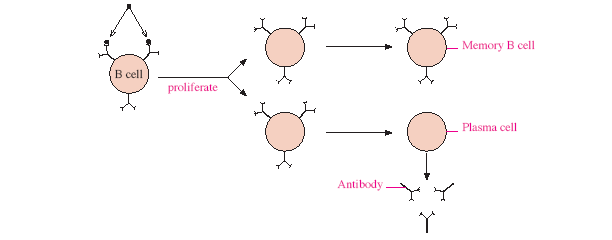
Fig. 6
• B Cells
-Play the
central role in humoral immunity.
-Recognize
specific antigens and can be activated with help from helper T cells.
-Undergo
clonal expansion to form memory B cells and plasma cells.
-Plasma cells
secrete large amounts of antibodies into blood and lymph.
• Memory B cells
• Plasma cells – Produce antibodies
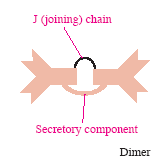
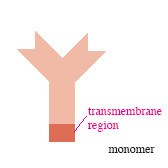
• Classes of antibodies
Classes
Shapes
Features
IgA
• Major antibody
in mucosal secretions
• Present in
breast milk, tears, saliva, and mucosal secretions
• Provides
localized defense at mucosal surfaces
IgD
• Membrane-bound
antigen receptor on naïve B cells
• Helps initiate
B-cell activation
IgE
• Mediates allergic reactions and defense against parasites
IgG
• Most abundant
antibody in blood
• Neutralization,
opsonization, and complement activation
• Provides passive
fetal/newborn immunity
• Crosses the
placenta
• Predominates in
secondary responses
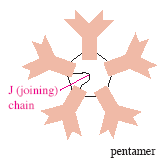
IgM
• First antibody produced in primary responses
• Strongly activates complement
• Agglutination
and neutralization
b.Cell-Mediated
Immunity
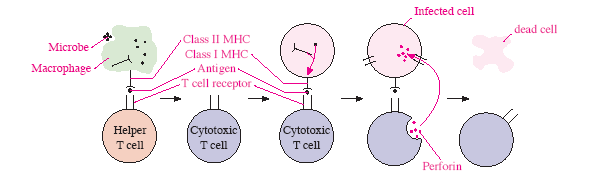
Activates cytotoxic T cells that destroy
infected or cancerous cells.
Fig.
7
• Cytotoxic T cell
-Central to
the cell-mediated immune response.
-Mature in
the thymus and become activated after recognizing specific antigen.
-Kill target
cells using perforin and granzymes.
• MHC
class II molecules
- On antigen-presenting cells;
present antigen to helper T cells.
• MHC class I molecules
- On nearly all nucleated cells; present
antigen to cytotoxic T cells.